
start with how you move.
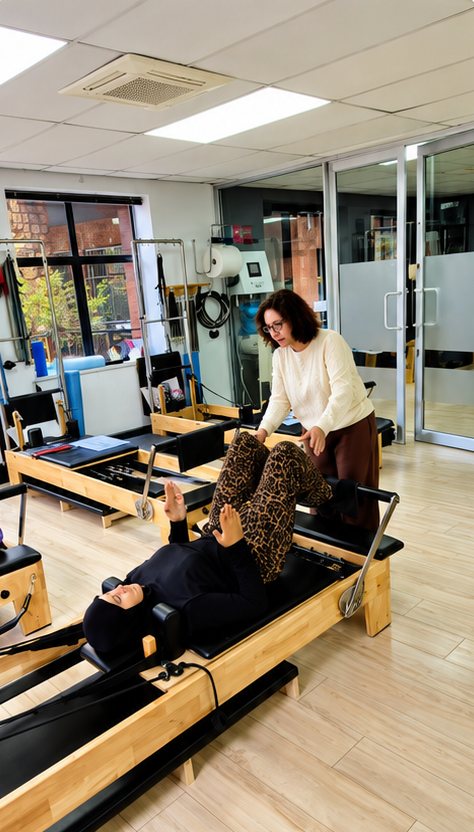
Your posture says a lot about the natural state of your tissues. A body assessment shows which areas are under more strain and which muscle groups cause it, so your programme is built around you, and you join the right class safely.
three steps in.
- 01AssessmentA private session with an instructor. We look at your posture, balance and movement, and take any injuries, pathologies or conditions into account.
- 02RecommendationWe confirm whether you’re ready to join a group class straight away, or suggest a few private classes first.
- 03Your programmeSpecific programmes are developed for your needs and goals, and adjusted on an ongoing basis.
balance, in every sense.
Balance, one of the principles of Pilates, means many things: strength versus flexibility, standing on one leg or an unstable platform, body symmetry, and a well-designed training programme.
Musculoskeletal balance and muscle efficiency are important for longevity and long-term health. At every joint, the muscles on either side need to be balanced, and joints are safest in a neutral position, where muscles work most efficiently.
An initial assessment matters most if you have a history of injuries or pathologies, but it’s also the best way to prevent injury and develop balanced muscles from day one.
book your assessment.
Send us a message with a few times that suit you, and we’ll confirm your session.