How to choose a Pilates studio near you: 8 steps
How to choose a Pilates studio near you: check instructor qualifications, beginner assessments, equipment and class size. Includes questions to ask.
To choose a Pilates studio, look past the closest “Pilates near me” result and check what matters most: the instructors’ qualifications, how beginners are started, the equipment, the class size, and whether the studio teaches people like you. A studio that gets these right will do far more for your body than the one that is simply nearest. This guide shows you how to choose a Pilates studio in eight steps, with the questions to ask before you book.
Step 1: Start with “Pilates near me”, then shortlist
Searching for Pilates near me on Google Maps is a good first step. You will see which studios are close to your home, work or children’s school, along with their reviews and opening hours. Shortlist two or three studios you could reach easily before work, after work or around errands, because a class you can get to is a class you will keep doing.
Then compare their timetables. Check that classes run at times you can make every week, and that the studio offers the type of class you want (more on that below). Most studios publish a timetable and price list online. If they don’t, ask for them.
Step 2: Check the instructors’ qualifications
This is the most important step when you choose a Pilates studio. Pilates looks gentle, but poorly taught exercises can strain your back, neck or joints. Ask:
- Where did the instructors train, and how many hours did the course take?
- Is the course accredited? In South Africa, look for recognition from bodies such as REPSSA, SASP (physiotherapy CEUs) or BASA.
- Are they qualified on the apparatus they teach, not only the mat?
- Do they keep up with continuing education?
Internationally, the Pilates Method Alliance sets out what a comprehensive teacher training should cover. A good instructor will be happy to tell you about their training. For more on why it matters, read what certification a Pilates instructor needs.
Step 3: Ask how they start beginners
A good Pilates studio won’t put you straight into a busy class without knowing how your body moves. Look for one of these:
- An orientation or assessment session, where an instructor checks your posture, strength and any injuries, then recommends the right class level.
- Private one-on-one sessions until you are strong and confident enough to join a group.
If a studio asks nothing about your health or injuries before your first class, treat that as a warning sign. Read what to expect at your first Pilates session to know what a proper start looks like.
Step 4: Look at the equipment
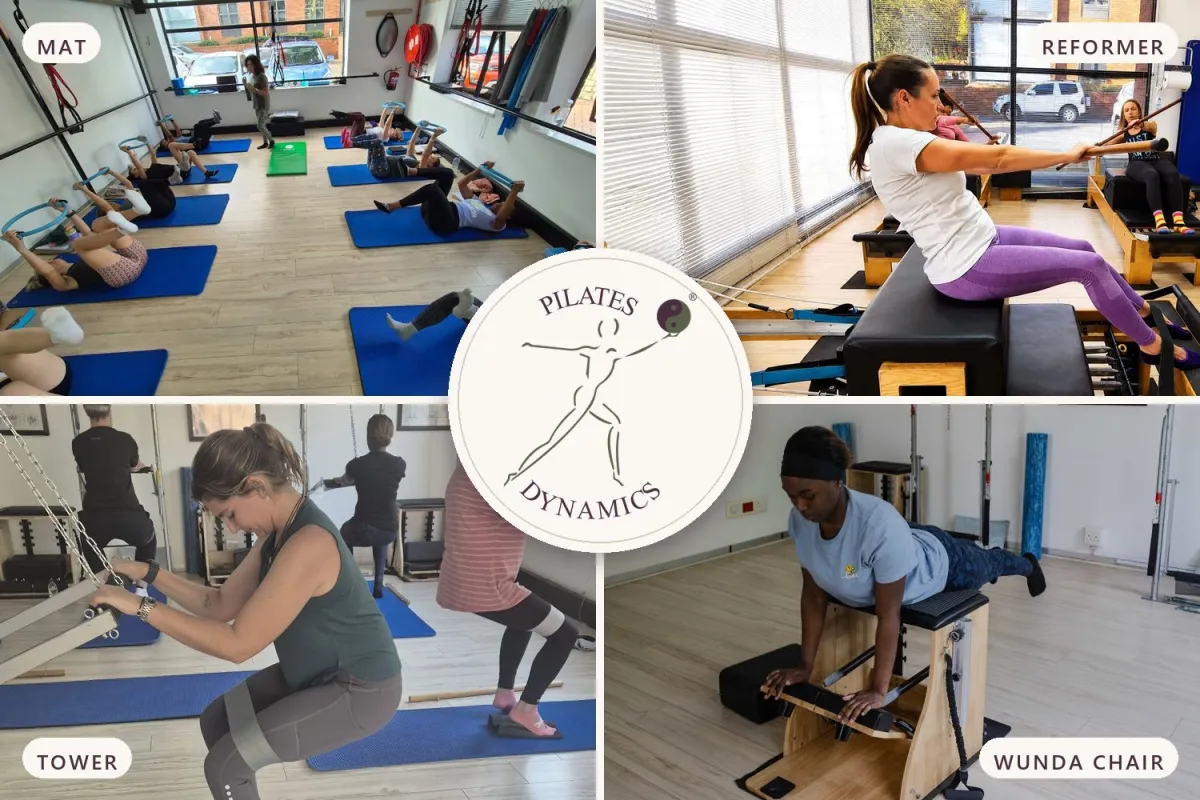
Pilates is far more than mat work. Joseph Pilates, who created the method, also designed spring-loaded apparatus to support and challenge the body. A fully equipped classical studio will have most of these:
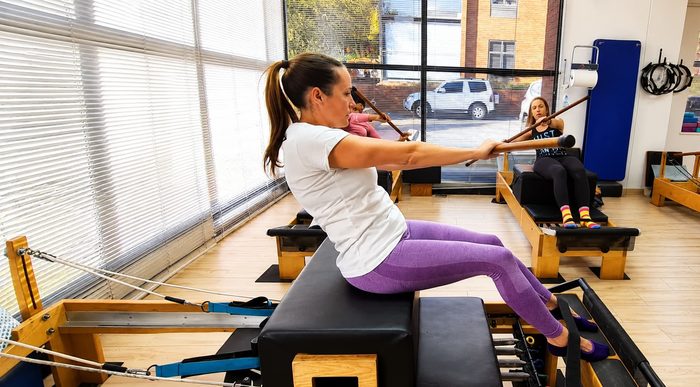
- Reformer: a sliding carriage with springs, the best-known Pilates machine.
- Cadillac or tower: a frame with springs and bars for supported stretching and strength work.
- Wunda chair: a small, challenging box with a sprung pedal for balance and strength.
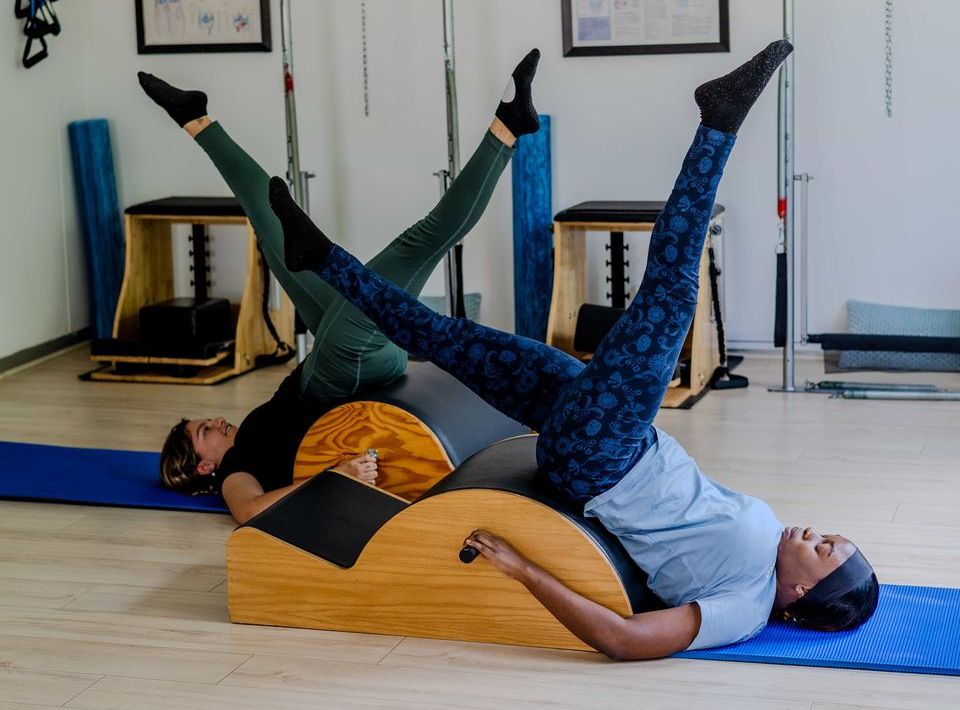
- Ladder barrel and arc barrel: curved apparatus for spine mobility and stretching.
- Small equipment: magic circles, balls, weights, bands, gliding discs, kettlebells and toning bars that add variety to mat classes.
A studio with only mats can teach good Pilates, but you will have fewer options as you get stronger. Not sure which to choose? Compare reformer and mat Pilates.
Step 5: Find out the class size
Pilates is about precise, controlled movement, so your instructor needs to see you. In a crowded class, mistakes go uncorrected. Ask how many people are in a group class and how many machines are in the room. Small groups mean more hands-on correction and faster progress. Here is why smaller Pilates classes are better.
Step 6: Make sure the studio caters for you
Everybody can do Pilates, whether you are 5 years old or 80, a novice or an athlete. Most people move in the same patterns every day, at a desk or in their sport, which overworks some muscles and weakens others. Pilates balances the body by strengthening the muscles you don’t usually use, and there is evidence, such as this Cochrane review, that it can help ease chronic low back pain.
Because every body is different, check that the studio has instructors trained for your needs:
- Pregnancy and after birth: pre-natal classes should focus on core stability, gentle strengthening and the pelvic floor, taught by instructors trained for pregnancy.
- Children and teens: look for classes designed for young bodies, not adult classes made shorter.
- Seniors: exercises should be adapted for balance, bone strength and joints.
- Athletes and injury recovery: ask whether the studio works alongside physiotherapists and biokineticists.
Step 7: Choose between classical and contemporary Pilates
Some studios teach Classical Pilates, which follows Joseph Pilates’ original exercises and order on the mat and apparatus. Others teach contemporary styles that mix in newer, fitness-led exercises. Both can be good. Classical Pilates suits people who want a structured, proven method with an emphasis on control, breathing and a strong centre. Ask the studio which approach they follow and why.
Step 8: Try a class before you choose a Pilates studio
Before you sign up for a monthly package, book an orientation or a single class. Notice how the instructor corrects you, whether the studio is clean and the equipment well kept, and whether you feel welcome. Then decide.
Questions to ask before you choose a Pilates studio
- Are your instructors certified, and on which apparatus?
- Do beginners start with an assessment or private session?
- How many people are in a group class?
- Which equipment do you have?
- Do you teach classes for my age, stage or condition?
- Do you teach classical or contemporary Pilates?
- What are your prices and timetable?
How Pilates Dynamics measures up
If you are looking for a Pilates studio near Randburg, here is how we answer those questions. Pilates Dynamics is at Stonemill Office Park, 300 Acacia Road, Darrenwood, right next to Cresta Mall, and we teach Classical Pilates for modern life.
- Instructors: professional and highly qualified. We also run Pilates Dynamics Academy, which trains instructors on accredited Pilates teacher training courses. Meet our team.
- Beginners: start with an orientation and assessment session, or private one-on-one classes.
- Equipment: reformers, Cadillacs, towers, Wunda chairs, ladder barrels and arc barrels, plus a full range of small equipment. See our large equipment classes.
- Who we teach: adults of every level, seniors, athletes, pre- and post-natal clients, kids and teens.
- Timetable and prices: see our class timetable and prices.
Specials: new to Pilates? Your orientation and assessment class is currently free, so you can try us before you decide. Thinking of becoming an instructor? Save 30% on our Intensive Reformer course and our Comprehensive Conversion course (reformer, tower, Wunda chair, ladder barrel and arc barrel). See the courses.
To book or ask a question, call 011 792 5459, WhatsApp 072 999 2229 or email info@pilatesdynamics.co.za. You can also book online.
Frequently asked questions
What should I look for in a Pilates studio?
Qualified, accredited instructors, a proper start for beginners, small classes, a range of equipment, and classes suited to your age and health. Location and timetable matter too, but only once those are in place.
Is a reformer studio better than mat classes?
Not necessarily. Mat Pilates builds the foundation of the method; the reformer and other apparatus add support and resistance. A studio that offers both lets you progress.
How do I know if a Pilates instructor is qualified?
Ask where they trained, how long the course was, and whether it is accredited (in South Africa, by bodies such as REPSSA, SASP or BASA). Check that they are qualified on the apparatus they teach.
Can a complete beginner join a Pilates studio?
Yes. A good studio will start you with an assessment or private sessions, then place you in a class at the right level.